
Samsung Galaxy Z Fold8: The Widest, Thinnest Fold Yet — Full Review
Samsung reshapes its flagship foldable with a wider 4:3 inner canvas, a 5.5-inch cover screen, and a titanium-reinforced hinge that weighs just 201 grams. Here is the complete spec breakdown, pricing, and what it means for accessory buyers.
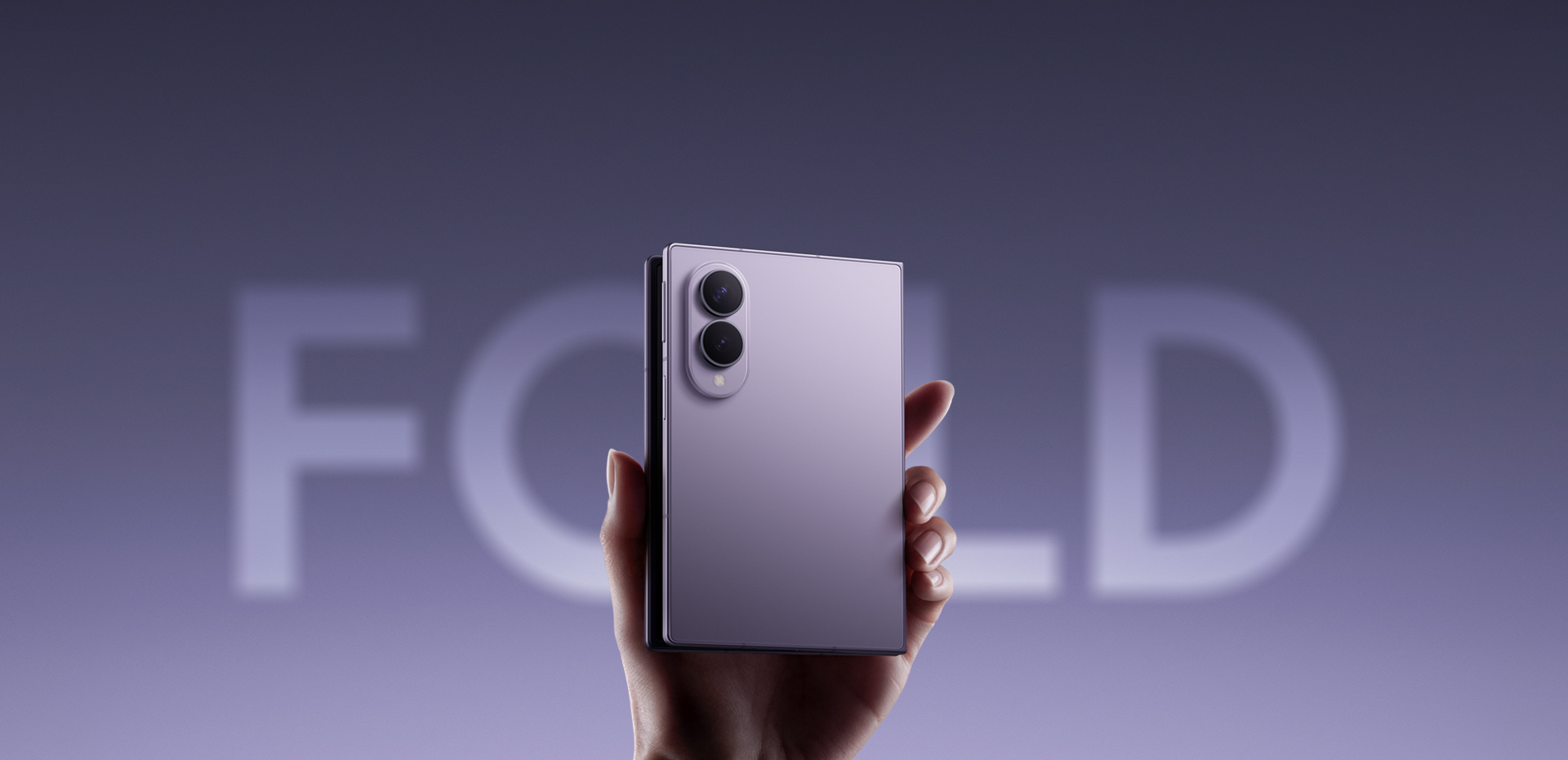
The foldable phone market has spent the last five years asking one question: when will a folding device stop feeling like a compromise between a phone and a tablet? With the Galaxy Z Fold8, unveiled at Galaxy Unpacked in London on July 22, 2026, Samsung finally delivers an answer that sounds less like an apology and more like a statement. The Fold8 is shorter, wider, thinner, and lighter than any of its predecessors. It replaces the tall, narrow silhouette that defined the Z Fold line with a form factor closer to a paperback book, while keeping the engineering that made Samsung the volume leader in foldables: an aluminum frame, a titanium-reinforced hinge, IP48 water resistance, and two gorgeous Dynamic AMOLED 2X displays.
This is not a minor refresh. Samsung calls the new shape a "wide fold," and the numbers back up the marketing. The cover screen is now a 5.5-inch panel with a 10:9 aspect ratio, which makes it genuinely usable as a one-handed phone. The inner screen stretches to 7.6 inches diagonally with a 4:3 aspect ratio, giving it the same proportions as many small tablets and making multitasking feel natural rather than cramped. For anyone who has previously looked at a Z Fold and thought, "great concept, wrong shape," the Fold8 is the device that may finally change their mind.
For wholesalers and accessory sellers in the car-mount and wireless-charger space, the Fold8 also matters because it reframes what "foldable compatibility" means. A wider phone needs a wider cradle. A 4:3 unfolded tablet-mode device needs a dash mount that can hold it securely in landscape. And a 201-gram flagship with wireless charging means customers will be shopping for MagSafe-compatible or Qi2-ready car accessories that can handle the extra width without blocking the hinge. In this article we break down every major specification, compare the Fold8 to its rivals, and explain why the new proportions make a purpose-built car mount more important than ever.
Design & Build: The Wide-Fold Revolution
Until now, Samsung's Z Fold devices were tall and narrow when closed. The outer screen felt like a stretched-out remote control, and typing on it required both hands for most users. The Fold8 abandons that approach. When closed, the device is wider and shorter, closer in footprint to a traditional large smartphone. The official numbers list a folded width that makes one-thumb typing credible and a closed thickness of 9.7 millimeters, which is only marginally thicker than a conventional flagship in a slim case.
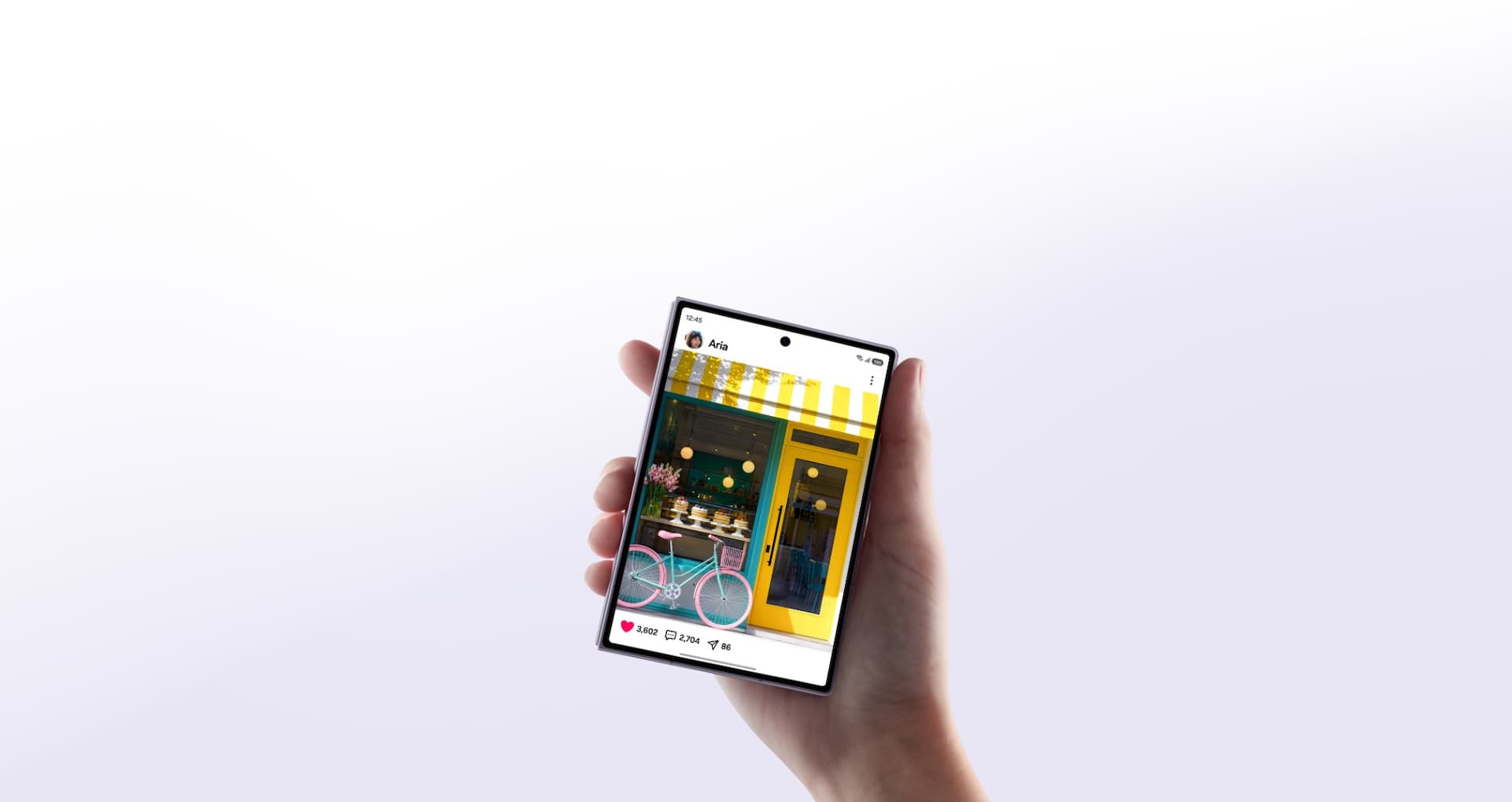
Open the phone and the engineering becomes even more impressive. Samsung has trimmed the unfolded thickness to just 4.5 millimeters. That is thinner than many standalone tablets and noticeably slimmer than the Fold7. The total weight is 201 grams, only a few grams heavier than a Galaxy S26 Ultra and lighter than many competing foldables. For a device that can replace both a phone and a small tablet, 201 grams is a genuine achievement.
The materials Samsung chose reinforce the premium positioning. The frame is Armor Aluminum, the same grade the company uses on its Ultra-series slab phones. The front glass is Corning Gorilla Glass Ceramic 3, which offers improved drop resistance, while the back panel uses Gorilla Glass Victus 2. Under the folding display, Samsung has added what it calls Flex Titanium: a dual layer of titanium built into the shock-absorbing structure beneath the screen. The company says this reduces the visibility of the crease and improves durability when the device is repeatedly opened and closed.
The hinge itself has been upgraded to what Samsung calls the Armor FlexHinge. It is designed to be thinner and more rigid than the previous generation, with a flatter folding profile and a smoother opening motion. Samsung's internal testing targets hundreds of thousands of folds, and while long-term durability always requires real-world verification, the combination of titanium reinforcement, aluminum frame, and a redesigned hinge mechanism signals confidence.
Durability also gets an official rating: IP48. The "4" means the device is protected against solid objects larger than one millimeter, which is better than the dust resistance on earlier IPX8-rated foldables. The "8" means it can survive submersion in up to 1.5 meters of freshwater for up to 30 minutes. Samsung is careful to note that water resistance is not permanent and can degrade over time, but an IP rating is still a meaningful advantage over many competitors that lack any official protection.
Color options for the Fold8 include Graphite, Cream, and Lavender as the standard finishes, plus a Samsung.com-exclusive Pistachio for buyers who order directly from Samsung. All four colors use matte finishes that resist fingerprints, and the Graphite option in particular looks understated enough for enterprise buyers while still feeling premium.
Displays: Two Screens, One Coherent Experience
The most important change on the Fold8 is not any single number but the relationship between the two screens. The cover display is now a 5.5-inch Dynamic AMOLED 2X panel with a resolution of 1248 by 1972 pixels and a 10:9 aspect ratio. That is close to the proportions of a standard smartphone, which means apps scale correctly, keyboards are comfortable, and you no longer feel like you are using a secondary display while the phone is closed. It is the first Z Fold where the outer screen does not feel like a compromise.
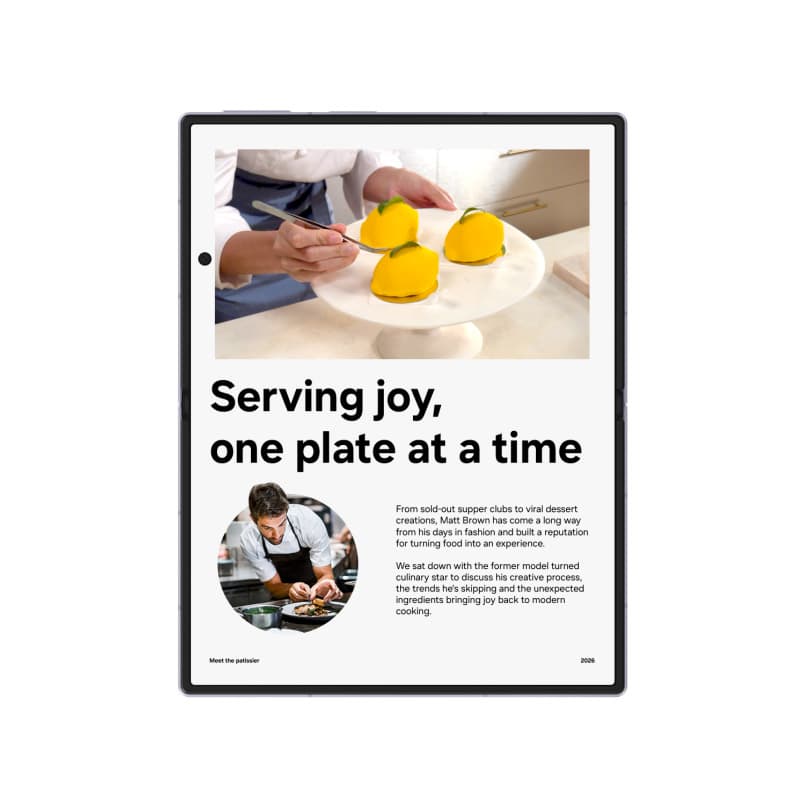
Unfold the device and you get a 7.6-inch main display with a resolution of 2448 by 1848 pixels and a 4:3 aspect ratio. That is the same shape as many productivity-oriented tablets, and it makes the Fold8 far better for reading documents, editing spreadsheets, annotating PDFs, and watching video without black bars. Samsung has also applied an anti-reflection coating to the main screen, which significantly reduces glare under bright office lights or outdoor sun. Peak brightness reaches 3000 nits, matching the brightest panels on the market and making the phone comfortably viewable even in direct sunlight.
Both displays support a 1Hz to 120Hz adaptive refresh rate. The panels can drop to 1Hz for static content like e-books or photos, saving battery, and ramp up to 120Hz for scrolling, gaming, and stylus-free navigation. The transition is handled by LTPO backplane technology, which is now standard on Samsung's high-end panels. Both screens also support HDR10+ for compatible streaming content.
One subtle but important improvement is the crease. Samsung has been working on the center fold since the original Galaxy Fold, and on the Fold8 the crease is less visible than on any previous generation. The combination of a redesigned hinge, a thinner display stack, and the Flex Titanium reinforcement means that when the screen is viewed head-on, the crease is barely noticeable in most content. It is still present if you look for it, but for the first time it does not dominate the viewing experience.
Multitasking benefits immediately from the wider screen. Samsung's One UI now lets users run three apps side by side in a split-screen layout, drag content between windows, and save app pair shortcuts to the taskbar. The new shape also makes the taskbar itself wider, with larger touch targets. For road warriors who need to reference a map, respond to messages, and check a spreadsheet at the same time, the Fold8 is closer to a pocketable laptop than any previous foldable.
Performance: Snapdragon 8 Elite Gen 5 for Galaxy
Powering the Galaxy Z Fold8 is the Snapdragon 8 Elite Gen 5 for Galaxy, a customized version of Qualcomm's flagship mobile platform. Samsung says the "for Galaxy" variant has been tuned for higher sustained CPU and GPU performance, better NPU throughput for on-device AI, and improved power efficiency compared with the standard version of the chip. It is built on a 2-nanometer-class process, which helps explain how Samsung achieved both higher performance and a thinner chassis.
Memory and storage configurations follow Samsung's usual tiering. The 256GB and 512GB models both ship with 12GB of RAM, while the 1TB flagship configuration bumps RAM to 16GB. There is no microSD expansion, so buyers should choose storage carefully. For business users who plan to keep the device for several years, the 512GB or 1TB models are the safer choices, especially when accounting for 4K video, large app libraries, and offline maps.
Thermal management is critical in a thin foldable, and Samsung has expanded the vapor chamber inside the Fold8 to help sustain peak performance during gaming, video editing, and navigation. Early benchmark results shared by reviewers show an AnTuTu v10 score in the region of 3.1 million, a Geekbench 6 single-core score around 3,520 and a multi-core score around 10,000. These numbers place the Fold8 among the fastest Android devices of 2026 and comfortably ahead of most non-gaming phones for raw compute.
The software stack is Android 17 with Samsung's One UI 9. Samsung has committed to seven generations of Android OS updates and seven years of security patches for the Fold8, which brings it in line with Google's Pixel line and is a strong selling point for enterprise buyers. The One UI layer adds multitasking shortcuts, edge panels, DeX desktop mode, and deep integration with Samsung's ecosystem of tablets, watches, and earbuds.
Cameras: Dual 50MP, No Compromise on the Basics
Samsung has simplified the rear camera system on the standard Fold8 compared with the Fold7. Instead of a triple-lens array with a dedicated telephoto sensor, the Fold8 uses a dual-camera setup: a 50-megapixel wide camera with an F1.8 aperture and optical-quality image stabilization, plus a 50-megapixel ultra-wide camera with an F1.9 aperture. The company says the decision was made to save internal space and reduce weight while still covering the focal lengths most users actually need.
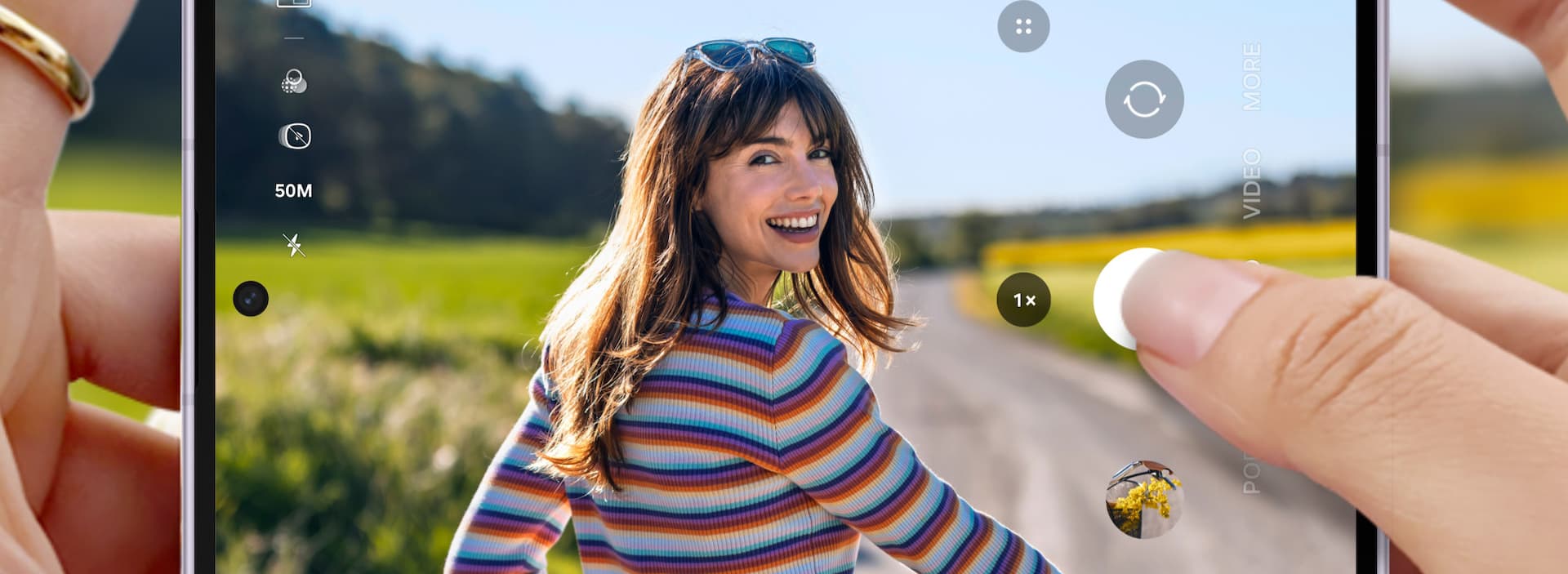
The 50MP wide sensor is Samsung's latest generation, with larger pixels and improved low-light performance. It supports 2x optical-quality zoom through sensor cropping, and up to 10x digital zoom for situations where a dedicated telephoto would normally be required. In practice, 2x optical-quality zoom produces results that are difficult to distinguish from a dedicated 2x lens for social sharing, while 10x digital zoom is best reserved for bright daylight.
The ultra-wide camera has been upgraded to 50 megapixels, matching the resolution of the main camera. This makes a noticeable difference in landscapes, group shots, and architectural photography, and it also improves the quality of macro shots taken in ultra-wide mode. Both rear cameras can record 4K video at 60 frames per second, and the main camera supports 8K recording at 30 frames per second for users who need maximum resolution.
For selfies and video calls, Samsung has placed a 10-megapixel camera on the cover screen and another 10-megapixel camera under the main display. The cover-screen camera is the one you use for quick selfies, while the main-screen camera uses a wider 100-degree field of view that is ideal for group video calls when the phone is unfolded. Samsung continues to omit a front camera punch on the inner screen in favor of an under-display design, which keeps the main display visually uninterrupted.
Photography is also where Samsung's Galaxy AI features are most visible. Photo Assist can remove unwanted objects, expand image boundaries, and suggest edits. Generative Edit lets users move or resize subjects after the shot. And Auto Trim can turn long videos into shareable highlight reels. These features run on the NPU inside the Snapdragon 8 Elite Gen 5, which means they work locally without uploading images to the cloud.
Galaxy AI & Software: Smarter Than the Sum of Its Parts
Artificial intelligence is the headline feature of the Fold8's software experience, and Samsung has integrated it more deeply than on any previous device. The two flagship features are Now Brief and Now Nudge. Now Brief is a morning summary that surfaces weather, calendar events, reminders, health metrics, and news in a single card. Now Nudge proactively suggests actions based on context: if you took a photo of a parking spot, it might remind you where you parked; if you promised to call someone in a message, it can nudge you to follow through.

Google Gemini is also woven throughout the interface. Users can long-press the side button to invoke Gemini for complex queries, and the assistant can perform multi-step actions across apps, such as finding a restaurant, checking reviews, and adding it to a calendar event in a single conversation. Samsung's Interpreter app has been updated with a dual-screen conversation mode that shows translated text on both halves of the unfolded device, which is genuinely useful for travel and business meetings.
Live Translate now works with more messaging and calling apps, and it can run entirely on-device for supported languages. Circle to Search, which lets users draw a circle around anything on screen to search for it, has been expanded to recognize text, images, and even handwritten notes. For users who live inside Samsung's ecosystem, the Fold8 also integrates tightly with Galaxy Watch, Galaxy Buds, Galaxy Tab, and Galaxy Glasses.
One omission is notable: the standard Galaxy Z Fold8 does not support S Pen input. Samsung has reserved stylus support for the larger Galaxy Z Fold8 Ultra, which also adds a dedicated telephoto camera and a bigger battery. If stylus input is essential, buyers will need to step up to the Ultra model. For everyone else, the standard Fold8 covers the core experience without the extra cost.
Battery & Charging: All-Day Endurance in a Slimmer Body
Despite the thinner chassis, Samsung has managed to fit a 4800 milliamp-hour battery into the Galaxy Z Fold8. The rated capacity is 4660 mAh, but the typical capacity Samsung advertises is 4800 mAh. In Samsung's internal video playback test, the Fold8 achieved up to 26 hours of continuous playback, which is competitive with large slab phones and a meaningful improvement over earlier foldables.
Real-world battery life will depend heavily on how the device is used. The 7.6-inch main display is beautiful but power-hungry at high brightness, and gaming or navigation will drain the battery faster than video playback. For a typical day of mixed use — cover screen for messaging, main screen for email and video, some camera use, and navigation — most reviewers report that the Fold8 comfortably reaches the end of a day with 15 to 25 percent remaining. Heavy users may still want to top up before an evening out.
Charging speeds are competitive but not class-leading. The Fold8 supports 45-watt wired charging through USB Power Delivery, which can take the battery from empty to around 50 percent in roughly 30 minutes. Wireless charging is supported at up to 20 watts with a compatible Samsung pad, and reverse wireless charging lets the Fold8 share power with earbuds or a smartwatch. A 45-watt charger is included in some markets and sold separately in others, so buyers should check local packaging before purchasing.
Pricing, Availability & Accessories
Samsung launched the Galaxy Z Fold8 in multiple markets starting July 22, 2026, with pre-orders opening immediately and shipments beginning on August 6, 2026. In the United States, the device starts at $1,899.99 before trade-in, or roughly $79.17 per month on a payment plan. Samsung's launch promotion offers up to $250 off without trade-in and up to $800 in instant trade-in credit for qualifying devices, plus up to $1,900 in carrier deals for customers willing to switch or upgrade on an installment plan.
In India, the Fold8 starts at ₹174,999 for the 12GB RAM and 256GB storage variant. In China, Samsung has priced the device at ¥12,999 for the 12GB/256GB model, ¥14,599 for the 12GB/512GB model, and ¥17,799 for the 16GB/1TB model. The Chinese market names the standard colors slightly differently — Cream, Graphite, and Lavender are available everywhere, while Pistachio is exclusive to Samsung's official online store.
For accessory sellers, the Fold8 creates a clear opportunity. Because the device is wider than previous Z Fold models, many existing car mounts will grip the sides too tightly or leave the hinge unsupported. A cradle with adjustable side arms and a bottom support ledge is essential. The device also supports wireless charging, which means customers will be looking for Qi2-compatible or Samsung Fast Wireless Charging 2.0 car mounts that can deliver 20 watts without overheating. Finally, the 201-gram weight means suction-cup mounts and vent clips need stronger holding force than mounts designed for 170-gram phones.
Who Is the Galaxy Z Fold8 For?
The Fold8 is not a phone for everyone, and Samsung does not pretend otherwise. At just under nineteen hundred dollars in the United States, it costs roughly twice the price of a competent flagship slab phone. But for the right buyer, the premium is justified by productivity gains that are difficult to replicate on a conventional device.
Business travelers are the most obvious audience. The 7.6-inch 4:3 display is large enough to review contracts, annotate PDFs, and participate in video calls without squinting, while the 201-gram weight means it is still pocketable on airport dashes. The cover screen is now wide enough to handle quick replies and two-factor codes without unfolding the device, which is important when you are standing in a security line with one hand free. Dual SIM support, DeX desktop mode, and seven years of updates make it a plausible laptop replacement for light road warriors.
Content consumers and mobile gamers also benefit. The wider aspect ratio eliminates the letterboxing that plagued earlier foldables when watching YouTube or Netflix, and the 120Hz adaptive refresh rate keeps motion smooth during high-frame-rate games. The stereo speakers are tuned by AKG and support Dolby Atmos, so media playback feels immersive on the large screen. For anyone who spends more than an hour a day watching video on their phone, the Fold8 is a meaningful upgrade.
Creators who need a compact second camera will appreciate the dual 50MP sensors and the ability to use the cover screen as a viewfinder for high-quality selfies. Vloggers can prop the phone half-open on a table and record from the rear cameras while seeing themselves on the cover display. This "Flex mode" functionality has been part of Samsung's foldables for years, but the wider cover screen on the Fold8 makes the viewfinder far more useful than on the tall, narrow Fold7.
What the Wider Shape Means for Car Mounts and Holders
Every time Samsung changes the dimensions of a flagship phone, the accessory industry has to recalibrate. The Fold8 is no exception. Because the closed device is both wider and thinner than the Fold7, many universal car cradles will either clamp the sides too aggressively or fail to reach deep enough to hold the phone securely. A cradle that works for a 74-millimeter-wide slab phone may pinch a foldable at the hinge, causing the device to sit crooked or even damaging the flexible display over time.
The first specification to check is the maximum clamp width. When closed, the Fold8 is wider than typical large phones, so a mount with adjustable side arms that open to at least 90 millimeters is essential. Equally important is the depth of the bottom ledge. Because the Fold8 is only 9.7 millimeters thick when folded, a shallow ledge can let the phone slide upward on bumpy roads. Look for cradles with a spring-loaded bottom support and rubberized contact points that grip without scratching the matte glass back.
Wireless charging adds another layer of complexity. The Fold8 supports wireless charging at up to 20 watts, but the charging coil is positioned in the lower half of the device when folded. A car mount with a fixed charging pad may not align correctly, leading to slow or intermittent charging. The best options use adjustable Qi2 or Samsung Fast Wireless Charging 2.0 pads that can slide up or down to match the coil position. Suction-cup mounts are generally more stable for a 201-gram device than vent clips, especially on rough roads, but a heavy-duty vent clip with a stabilizer arm can also work.
For unfolded in-car use, landscape dash mounts become more relevant. A driver who wants to use the 7.6-inch main screen for navigation needs a mount that can hold the device horizontally without obstructing the air vents or the gear selector. The mount must also keep the hinge area free so the phone can fold and unfold naturally. Avoid clamps that press directly on the center of the screen, as this can stress the crease area. Instead, choose mounts that grip the left and right edges and support the bottom frame.
For fleet buyers and B2B distributors, the Fold8 represents both a challenge and an opportunity. Existing inventory of narrow foldable mounts may not fit, creating a refresh cycle. At the same time, businesses that stock adjustable wide-body cradles and Qi2 car chargers early can capture demand from Fold8 buyers who discover that their old mount no longer works. Bundle deals that pair a wide cradle with a 45-watt car charger and a USB-C cable are likely to be popular among early adopters.
The 2026 Foldable Landscape: Fold8, Fold8 Ultra, and Flip8
Samsung did not launch the Fold8 alone. At the same Unpacked event, the company introduced the Galaxy Z Fold8 Ultra and the Galaxy Z Flip8, creating a three-tier foldable lineup for the first time. Understanding where the standard Fold8 sits in this family helps buyers choose the right device and helps accessory sellers stock the right SKUs.
The Galaxy Z Fold8 Ultra is the halo product. It features an 8-inch inner display, a dedicated telephoto camera, a larger battery, and S Pen support. It is aimed at power users who want a foldable that can truly replace a tablet and a stylus for note-taking. The Ultra is also thicker and heavier than the standard Fold8, which means it requires its own case and mount sizes. For accessory sellers, the Ultra is a separate SKU opportunity rather than a share-everything sibling.
The Galaxy Z Flip8 occupies the opposite end of the spectrum. It is a clamshell foldable with a smaller footprint, a lower price, and a focus on style and portability. Samsung emphasized that the Flip8 is the lightest foldable the company has ever made. It does not compete directly with the Fold8, but it does compete for the same "foldable curious" customer. For someone who wants a larger screen occasionally, the Fold8 is the better choice; for someone who wants a normal phone that folds in half, the Flip8 is the answer.
Outside Samsung's own lineup, the Fold8 enters a market that now includes Apple's iPhone Duo, which launched just days before the Fold8. The iPhone Duo takes a different approach to the same problem: it uses a 7.6-inch inner display like the Fold8 but keeps a more traditional iPhone-like cover screen and adds IP68 water resistance. The Fold8 counters with a wider cover screen, longer software support, and a slightly lower starting price. For accessory sellers, the takeaway is that 2026 is the year foldables become mainstream, and the category is large enough to support multiple form factors.
Spec Comparison: Fold8 vs. Fold7 vs. iPhone Duo
| Feature | Samsung Galaxy Z Fold8 | Samsung Galaxy Z Fold7 | Apple iPhone Duo |
|---|---|---|---|
| Cover display | 5.5" 1248×1972, 120Hz | 6.3" 2376×968, 120Hz | 5.4" cover, 120Hz |
| Main display | 7.6" 2448×1848, 4:3, 3000 nits | 7.6" 2160×1856, 120Hz | 7.6" inner, 3000 nits |
| Weight / unfolded thickness | 201 g / 4.5 mm | ~239 g / 5.6 mm | 254 g / 5.2 mm |
| Processor | Snapdragon 8 Elite Gen 5 for Galaxy | Snapdragon 8 Elite Gen 2 for Galaxy | A20 Pro (2 nm) |
| RAM / storage | 12GB/256GB, 12GB/512GB, 16GB/1TB | 12GB/256GB, 12GB/512GB, 12GB/1TB | 12GB/256GB, 12GB/512GB, 16GB/1TB |
| Rear cameras | 50MP wide + 50MP ultra-wide | 50MP wide + 12MP ultra-wide + 10MP 3x tele | 48MP wide + 48MP ultra-wide |
| Front cameras | 10MP cover + 10MP main | 10MP cover + 4MP under-display | 12MP cover + 12MP main |
| Battery / charging | 4800 mAh / 45W wired + 20W wireless | 4400 mAh / 25W wired + 15W wireless | Dual-cell / 45–60W wired + 25W MagSafe |
| Durability | IP48, Armor Aluminum, Flex Titanium | IP48, Armor Aluminum | IP68, titanium |
| S Pen | No | No (Fold7 Ultra only) | No |
| Starting price (USD) | $1,899.99 | $1,899.99 | $1,999 |
Final Verdict: The Most Complete Foldable Samsung Has Ever Built
After several generations of incremental improvements, the Galaxy Z Fold8 feels like the device Samsung was trying to build all along. The wider cover screen finally makes the phone usable when closed. The 4:3 inner display finally makes the tablet experience feel natural. And the thinner, lighter body finally makes the hardware feel like a flagship rather than a technology demo. These are not small changes; they are the difference between a foldable that demands compromise and one that simply works.
The trade-offs are clear but defensible. Samsung dropped the dedicated telephoto camera on the standard Fold8, which will disappoint users who frequently shoot at 3x or 10x zoom. S Pen support is reserved for the Ultra model, so stylus users must pay more. And the $1,899 starting price remains high enough to exclude casual buyers. But for the target audience — business users, power multitaskers, media enthusiasts, and early adopters — these compromises are outweighed by the gains in usability, durability, and portability.
From an accessory perspective, the Fold8 is a bellwether. Its wider dimensions mean that universal mounts designed for tall, narrow foldables will need to be revised. Its 20-watt wireless charging means that Qi2 car mounts will become a standard expectation rather than a premium option. And its 201-gram weight means that mounts must be engineered with stronger holding force and better vibration damping. For wholesalers and OEM buyers, the Fold8 is not just another phone launch; it is a signal that the foldable accessory market is entering a new phase of standardization and volume.
If you are already invested in the Samsung ecosystem, the Fold8 is an easy recommendation. It integrates seamlessly with Galaxy Watch, Galaxy Buds, Galaxy Tab, and Samsung's cloud services. If you are coming from an iPhone or a conventional Android flagship, the Fold8 is the most convincing argument yet that a foldable can be your only device. And if you are a business buyer evaluating fleet phones, the seven-year update promise and DeX desktop mode make the total cost of ownership easier to justify than ever before.
Frequently Asked Questions
What makes the Galaxy Z Fold8 different from the Fold7?
The biggest change is the shape. The Fold8 is shorter and wider, with a 5.5-inch 10:9 cover screen and a 7.6-inch 4:3 inner display. It is also thinner when unfolded (4.5 mm versus 5.6 mm) and lighter (201 g versus about 239 g). The standard Fold8 drops the dedicated telephoto camera but upgrades both the main and ultra-wide sensors to 50MP, and it adds a titanium-reinforced hinge layer called Flex Titanium.
Does the Galaxy Z Fold8 support the S Pen?
No, the standard Galaxy Z Fold8 does not support S Pen input. Samsung has reserved stylus functionality for the Galaxy Z Fold8 Ultra, which has a larger 8-inch inner display and additional camera hardware.
What is the screen refresh rate on the Fold8?
Both the 5.5-inch cover screen and the 7.6-inch main display support an adaptive 1Hz to 120Hz refresh rate using LTPO technology. The panels can ramp up for smooth scrolling and gaming, or drop to 1Hz to save power when displaying static content.
How bright is the Fold8 screen?
The main display peaks at 3000 nits, which is among the brightest mobile panels available in 2026. Samsung has also added an anti-reflection coating to the main screen to improve outdoor readability.
What processor does the Fold8 use?
The Galaxy Z Fold8 is powered by the Snapdragon 8 Elite Gen 5 for Galaxy, a customized version of Qualcomm's flagship chipset tuned for higher sustained performance and better AI throughput on Samsung devices.
How much does the Galaxy Z Fold8 cost?
In the United States, the Fold8 starts at $1,899.99 before trade-in. In China, pricing begins at ¥12,999 for the 12GB/256GB model, ¥14,599 for 12GB/512GB, and ¥17,799 for 16GB/1TB. Indian pricing starts at ₹174,999.
Is the Galaxy Z Fold8 water-resistant?
Yes, the Fold8 carries an IP48 rating. The "8" means it can withstand submersion in up to 1.5 meters of freshwater for up to 30 minutes, while the "4" provides protection against solid particles larger than one millimeter. Water resistance may decrease over time with normal wear.
What colors are available?
The standard colors are Graphite, Cream, and Lavender. Samsung also offers a Samsung.com-exclusive Pistachio finish for customers who purchase directly from Samsung's website or Samsung Experience Stores.
What charging speeds does the Fold8 support?
The Fold8 supports 45-watt wired charging and 20-watt wireless charging. It also supports reverse wireless charging for topping up accessories like earbuds and smartwatches. A compatible 45-watt charger may be included or sold separately depending on the market.
When did the Galaxy Z Fold8 launch?
Samsung announced the Galaxy Z Fold8 at Galaxy Unpacked in London on July 22, 2026. Pre-orders began the same day, and the device started shipping on August 6, 2026.
Source & Disclaimer
Specifications, pricing, and images in this article are based on the Samsung Galaxy Z Fold8 product page and related launch materials. For the most current details and regional availability, please refer to the official source:
Reference: Samsung Galaxy Z Fold8 — Official Product Page
Disclaimer: Product specifications and availability are subject to change. This article is for informational and accessory-buying guidance purposes only. Always confirm final specs with the manufacturer or an authorized retailer before purchasing.
Need a car mount that fits the wider Fold8?
The X01 adjustable wireless holder supports wide foldables and opens up to 110 mm — factory-direct OEM/ODM available.