
Xiaomi 18 Fold: Xiaomi’s First Wide-Format Foldable Enters the Ring
With a 7.58-inch 120Hz inner display, the in-house XRing O3 AI chipset, a 200MP Leica triple camera, and a 6000mAh battery, the Xiaomi 18 Fold is the company’s first wide-style book foldable. Here is the complete spec breakdown, China pricing, and what it means for accessory buyers.
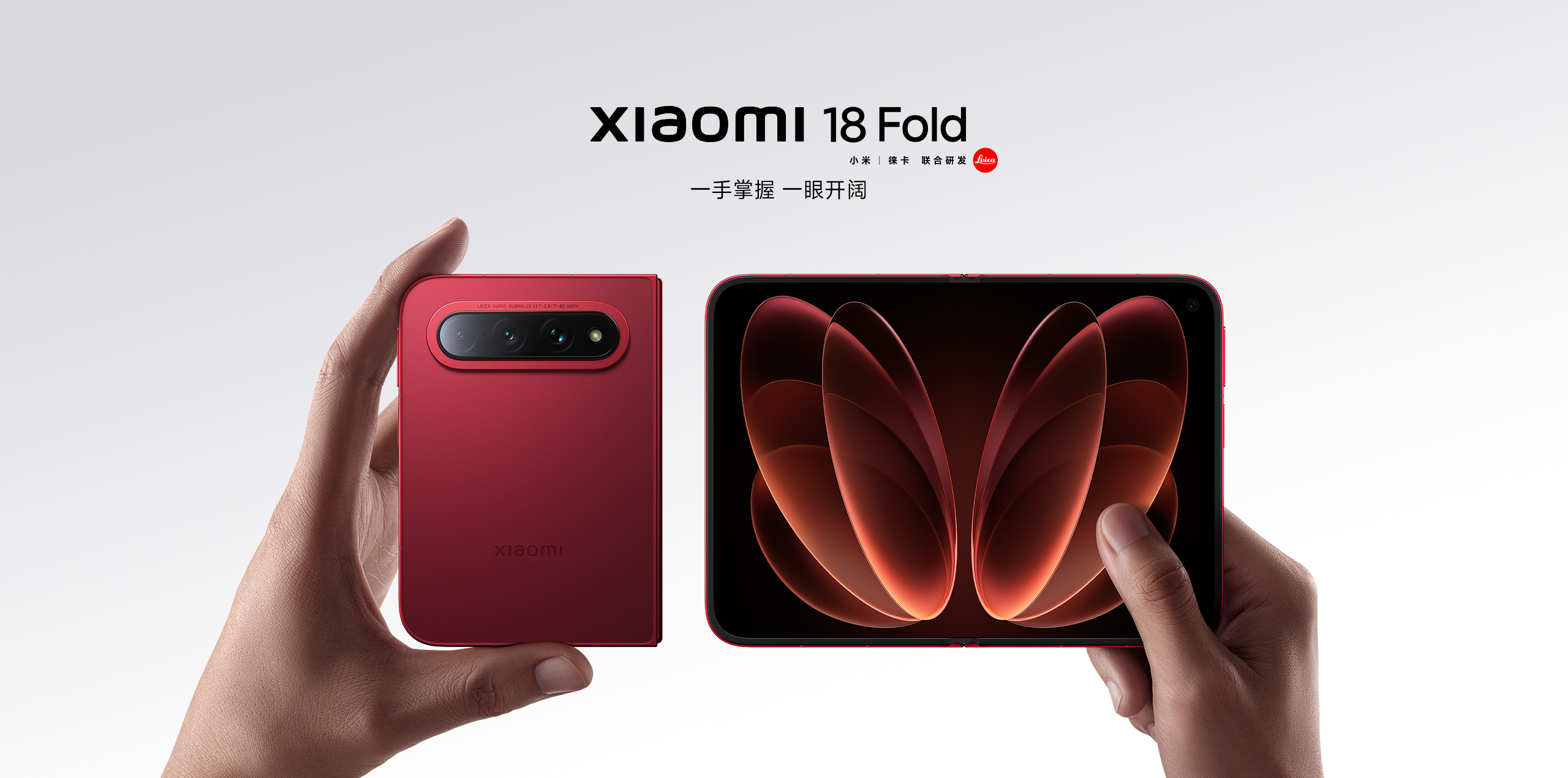
For years, Xiaomi watchers assumed the company’s first large foldable would be a Galaxy Z Fold rival: tall, narrow, and built to convert a regular phone into a slightly bigger one. The Xiaomi 18 Fold is nothing like that. It is a wide-format book foldable with a passport-style footprint, launched in China just as the category’s most talked-about competitor was expected to appear. With a 7.58-inch inner screen, a 5.38-inch cover screen, and a 2:1 aspect ratio on both, the 18 Fold is Xiaomi’s statement that it can build a premium foldable on its own terms — and on its own silicon. The device runs the new XRing O3 AI flagship processor, a 3nm deca-core SoC developed by Xiaomi itself, paired with up to 16GB of RAM, a 200MP Leica-backed triple camera, and a 6000mAh battery. It is also unusually slim and light for the format, weighing just 219 grams and folding down to 10.68 millimeters.
This is a strategically important device. Xiaomi has sold flip-style foldables before, but the 18 Fold is its first entry in the wide, tablet-like foldable segment that Samsung dominates and that Apple is rumored to be exploring. By using its own XRing O3 chip, Xiaomi can control pricing and supply in a way that rivals relying on Qualcomm cannot. By choosing a wide aspect ratio, it is betting that buyers want a cover screen that feels like a normal phone and an inner screen that feels like a small tablet, rather than the tall, narrow inner panels of traditional book folds. For wholesalers and accessory sellers, the 18 Fold also changes the math: a wide foldable needs different car mounts, different wireless charging cradles, and different case designs than a narrow book fold or a clamshell flip.
In this article we break down every major specification of the Xiaomi 18 Fold, compare it to the other 2026 foldables — Samsung Galaxy Z Fold8, HUAWEI Mate XT 2 Ultimate Design, and Apple iPhone Duo — and explain why the wide form factor matters for anyone selling mounts, chargers, or protective accessories. We also note the device’s current China-only availability, its pricing tiers, and the practical questions buyers will ask before they add it to their lineup.
Design & Build: Wide, Thin, and Surprisingly Light
The Xiaomi 18 Fold’s defining trait is its shape. When folded it measures 117.8 by 83.6 by 10.68 millimeters, and when unfolded it stretches to 117.8 by 163.8 by 5.02 millimeters. That makes it shorter and wider than a typical Galaxy Z Fold-style device. The payoff is twofold: the 5.38-inch cover screen is closer to a conventional smartphone aspect ratio, so one-handed use and full-keyboard typing feel natural when the phone is closed; and the 7.58-inch inner screen opens into a landscape-friendly canvas that is better for video, multitasking, and reading.
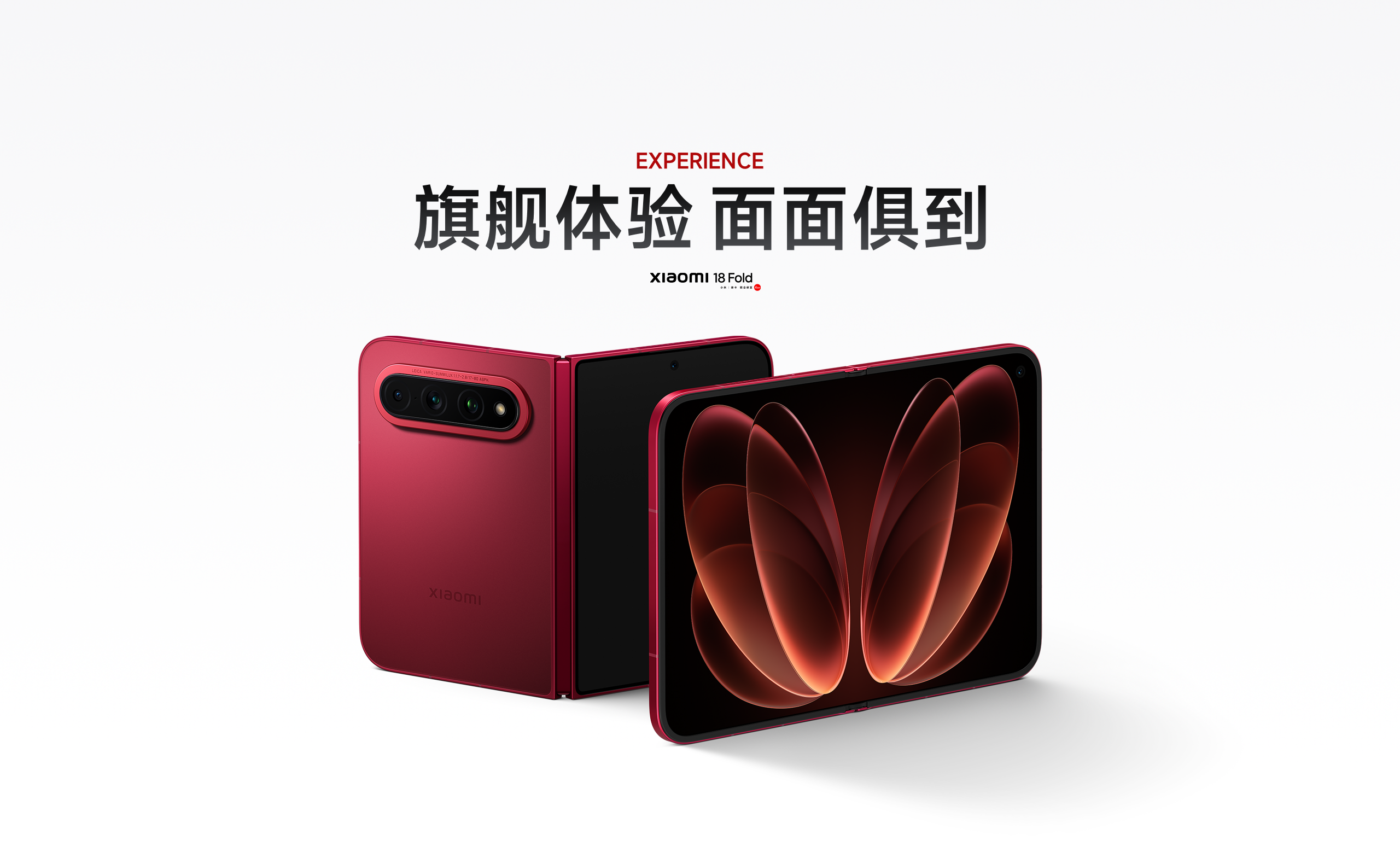
At 219 grams, the 18 Fold is one of the lightest large foldables announced in 2026. Xiaomi achieved this partly by using a silicon-nitride ceramic back on a special Ceramic Edition, and partly by refining the internal hinge and chassis. The standard colors are black, a vivid cherry red, and a warm gold tone Xiaomi calls "Warm Gold." The cherry red in particular has drawn attention because it gives the device a distinct visual identity compared with the sober blacks and silvers that dominate business-oriented foldables.
The camera module sits on the rear in a horizontal bar, a layout that echoes recent Xiaomi flagships and that leaves the hinge side relatively clean. The power button doubles as a side-mounted fingerprint scanner, and stereo speakers with Dolby Atmos support are built in. There is no 3.5mm headphone jack, which is expected at this tier, and the USB-C port handles charging, data, and audio. Overall, the 18 Fold looks and feels like a premium Xiaomi flagship that happens to fold, rather than an experimental first-generation product.
Displays: Two 120Hz AMOLED Panels, 4000 Nits Peak
Both screens on the Xiaomi 18 Fold are LTPO AMOLED panels with a 120Hz refresh rate and a peak brightness of up to 4000 nits. The inner display measures 7.58 inches diagonally with a resolution of 2364 by 1672 pixels, while the cover display measures 5.38 inches with a resolution of 1168 by 1712 pixels. Both share the same 2:1 aspect ratio philosophy, so apps and content scale smoothly between the two states without the jarring letterboxing common on narrower foldables.

The cover screen is protected by Xiaomi’s Shield Glass 3.0, which the company says improves drop and scratch resistance compared with previous generations. The inner folding screen uses a dual-layer ultra-thin glass (UTG) stack to balance flexibility with durability. High brightness matters for automotive use: a driver glancing at navigation on a dashboard mount in direct sunlight needs a screen that stays readable, and 4000 nits peak brightness puts the 18 Fold among the best current panels for that scenario.
Color accuracy and HDR support are also strong. Xiaomi notes Dolby Vision compatibility, and the large inner panel is well suited to media consumption, gaming, and productivity. For multitasking, the wide aspect ratio lets two apps sit side by side in a way that feels closer to a small tablet than to a phone, and HyperOS 4 includes split-screen and floating-window modes that take advantage of the extra width.
Hinge & Durability: IP58/IP59 on a Foldable
Durability has been the biggest question mark for every foldable, and Xiaomi is making an aggressive claim with the 18 Fold: an IP58/IP59 dust and water resistance rating. IP58 means the device is protected against dust ingress, while IP59 means it can withstand high-pressure water jets. Those ratings are rare on foldables because the hinge is a natural weak point for sealing. If Xiaomi’s implementation holds up in real-world testing, it would give the 18 Fold a meaningful advantage over rivals that stop at IP48 or omit ingress protection entirely.
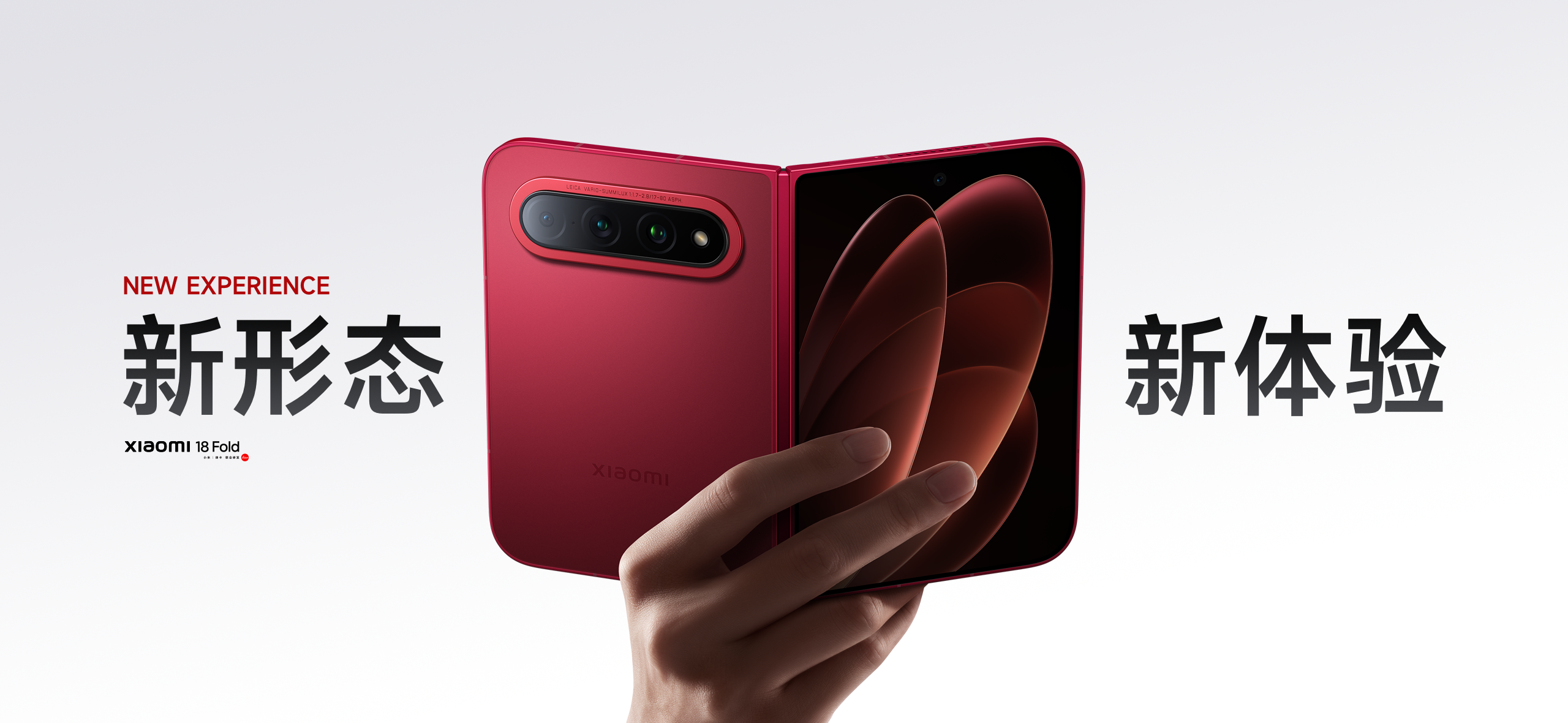
The hinge itself is a new generation mechanism designed for a wide book fold. Xiaomi has not published a specific fold-cycle rating, but the 10.68-millimeter folded thickness and 219-gram weight suggest a compact, multi-gear design. The company emphasizes that the device has passed internal tests for repeated opening and closing, and the flat-folded profile should help it sit securely in pockets and charging cradles.
For accessory sellers, the IP rating is good news: customers will be less nervous about using the phone in cars, kitchens, and outdoor environments. However, the wide folded width — 83.6 millimeters — is wider than many traditional car mounts and wireless charging cradles are designed to accept. That width is the single most important measurement for anyone buying a mount, case, or belt holster for the 18 Fold.
Performance: XRing O3, Xiaomi’s 3nm AI Flagship Chip
The heart of the Xiaomi 18 Fold is the XRing O3, Xiaomi’s own 3nm deca-core AI flagship processor. This is a significant moment for the company: instead of relying on a Qualcomm Snapdragon or MediaTek Dimensity chip, Xiaomi is using a self-designed SoC that it can optimize specifically for HyperOS and its own hardware. The XRing O3 includes an integrated AI engine, an advanced ISP for camera processing, and a modem capable of dual-SIM 5G.
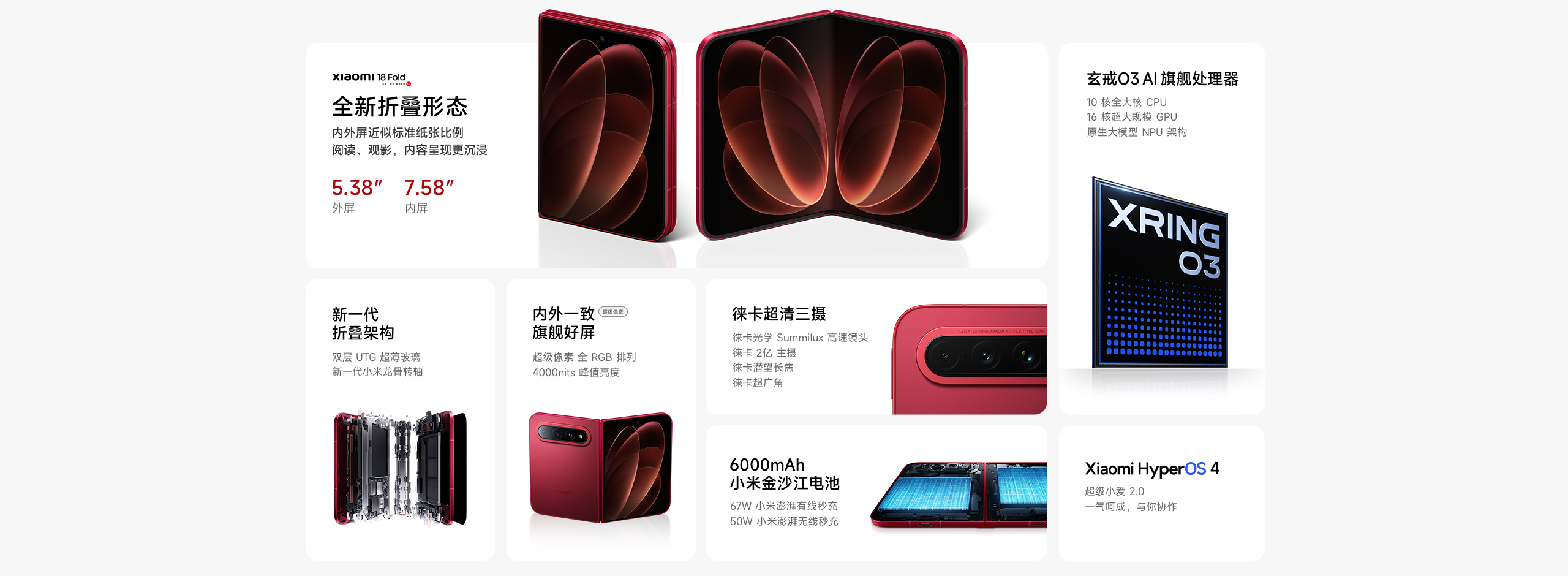
RAM comes in 12GB or 16GB configurations, and storage options are 256GB, 512GB, or 1TB of UFS 4.1 flash. Notably, the 16GB RAM variants use LPDDR6 memory from Chinese maker CXMT, while the 12GB variants use LPDDR5X. That memory choice is a quiet statement about Xiaomi’s supply-chain strategy and about the improving quality of domestic Chinese memory components. UFS 4.1 storage keeps app load times and file transfers fast, which is important for a device positioned as a productivity machine.
In daily use, the XRing O3 should deliver flagship-class performance for multitasking, gaming, and AI workloads. Xiaomi highlights on-device AI capabilities that integrate with the camera, voice assistant, and system optimization. For gaming on the large inner screen, the chip is paired with a vapor-chamber-style thermal design that spreads heat across the wider chassis. The real test will be sustained performance under load and long-term software support, both of which depend on Xiaomi’s ability to optimize its own silicon as effectively as Apple and Huawei have optimized theirs.
Cameras: 200MP Leica Triple System
The Xiaomi 18 Fold carries a Leica-branded triple rear camera system. The headline sensor is a 200-megapixel main camera based on Samsung’s ISOCELL HP5, a 1/1.56-inch type sensor with optical image stabilization. That is paired with a 50-megapixel periscope telephoto camera offering an 80-millimeter equivalent focal length, 3.5x optical zoom, and up to 160-millimeter 7x in-sensor "lossless" zoom. A 50-megapixel ultrawide camera completes the rear array.
The Leica partnership gives Xiaomi access to color science and lens-design expertise that it promotes heavily in its marketing. On the 18 Fold, that translates into Leica Authentic and Leica Vibrant color modes, cinematic video profiles, and advanced night-processing algorithms. The 200MP main sensor can shoot full-resolution images for maximum detail, or it can bin pixels down to 12.5MP or 50MP outputs for cleaner low-light performance.
Selfies and video calls are handled by 16-megapixel front cameras on both the cover screen and the inner screen. That means whether the device is folded or unfolded, there is a capable front-facing camera ready for conferencing, vlogging, or unlocking. For business users who live on video calls, the dual front cameras are a practical touch that some narrower foldables lack or implement with lower-resolution sensors.
Battery & Charging: 6000mAh Silicon-Anode Cell
Fitting a large battery into a thin foldable is always a challenge, but the Xiaomi 18 Fold packs a 6000mAh silicon-anode battery with 20 percent silicon content. Silicon-anode technology allows a higher energy density than conventional graphite anodes, which is how Xiaomi achieved this capacity in a 5.02-millimeter-thick unfolded body. The company calls the cell the "Jinsha River" battery, using the same branding it applies to other high-density cells in its 2026 lineup.
Wired charging peaks at 67W, while wireless charging reaches 50W. There is also reverse wireless charging for topping up earbuds, smartwatches, or a second phone. A full 67W charge of a 6000mAh cell should take roughly 40 to 50 minutes under ideal conditions, and the 50W wireless speed is fast enough to make a car-mounted Qi2-style charger genuinely useful during a commute.
For accessory sellers, the 50W wireless figure is the key spec. A customer who buys a premium foldable will expect a car mount that can charge it at meaningful speed, not trickle-charge it. Any cradle marketed for the 18 Fold should support at least 15W Qi2 and ideally advertise compatibility with Xiaomi’s 50W wireless protocol, or at minimum deliver high-power USB-PD passthrough. Heat management also matters: a 6000mAh battery charging at 50W in a dashboard cradle on a summer day needs active cooling or a vent-mount location.
Software: HyperOS 4 Based on Android 17
The Xiaomi 18 Fold runs HyperOS 4, Xiaomi’s custom Android skin built on Android 17. HyperOS 4 on the 18 Fold is designed around the large inner screen, with split-screen multitasking, floating windows, and app continuity between the cover and inner displays. Xiaomi has also added AI features that run on the XRing O3 NPU, including real-time translation, AI note summarization, and context-aware suggestions.
One of the practical strengths of HyperOS on a foldable is its desktop-like task management. Users can pin two or three apps in a split view, save app pairs for instant recall, and drag content between windows. The wider aspect ratio of the 18 Fold makes this feel more natural than on narrower foldables, where split-screen apps can feel cramped. For productivity buyers, this is likely to be a bigger selling point than raw benchmark scores.
Xiaomi’s update policy for the 18 Fold has not been fully detailed, but the company has generally committed to longer support windows for its flagship devices. Because the phone uses Xiaomi’s own silicon, long-term driver and security updates are entirely within Xiaomi’s control — a responsibility the company must meet to convince premium buyers.
Gaming and heavy media work benefit from the 18 Fold’s thermal design as much as from its chip. The wide chassis houses a vapor-chamber cooling system spread across the broad inner surface, which lets the XRing O3 sustain higher clocks during long sessions than the cramped cooling of a narrow foldable would allow. Combined with the 120Hz inner panel and stereo Dolby Atmos speakers, the device doubles as a credible portable console for cloud gaming and emulation, and the landscape orientation means most games render without pillarboxing. Xiaomi also surfaces a "Performance" mode and a "Balanced" mode in the control center, letting buyers trade a little sustained output for cooler hands and longer battery life depending on the moment.
Privacy and on-device intelligence are tightly linked here. Because the AI features — live translation, call summarization, and contextual suggestions — run on the local NPU rather than a cloud server, sensitive text and audio can stay on the device. For business users who handle confidential documents or client calls, that local-first approach is a meaningful advantage over rivals that route assistant features through external servers, and it also keeps those features working in airplane mode or low-connectivity areas.
Pricing, Configurations & Availability
Xiaomi launched the 18 Fold in China with four main configurations and a special ceramic edition. Prices at launch are as follows:
- 12GB + 256GB: CNY 10,999 (approximately $1,638)
- 12GB + 512GB: CNY 11,999 (approximately $1,787)
- 16GB + 512GB: CNY 12,999 (approximately $1,936)
- 16GB + 1TB: CNY 14,999 (approximately $2,234)
- Ceramic Special Edition 16GB + 1TB: CNY 15,999 (approximately $2,383)
At the entry level, the 18 Fold undercuts both the HUAWEI Mate XT 2 and the Samsung Galaxy Z Fold8 by a significant margin while offering competitive specs. That pricing is possible partly because the XRing O3 is an in-house chip, avoiding the premium that Qualcomm charges for its flagship Snapdragon platforms. Xiaomi has not announced global availability at the time of writing, and the device is expected to remain China-only for the initial launch phase. For international buyers, gray-market imports will be the only option until Xiaomi decides to expand.
Who Is It For?
The Xiaomi 18 Fold is aimed at three groups. First, power users who want a large-screen device that can replace a small tablet for reading, spreadsheets, and media. The 7.58-inch inner display and wide aspect ratio make it genuinely useful for productivity in a way that narrower book folds sometimes are not. Second, Xiaomi ecosystem loyalists who already use the company’s phones, wearables, and home devices and want a premium foldable that integrates cleanly with HyperOS. Third, buyers who are curious about foldables but have been put off by high prices; the 18 Fold’s entry price is aggressive enough to tempt experimenters.
It is probably not the best choice for users who prioritize one-handed use above all else, because even folded it is wider than a typical slab phone. It is also not ideal for anyone who needs immediate global warranty coverage or guaranteed access to Google Mobile Services, since the China launch model ships with Xiaomi’s domestic software stack and availability elsewhere is unconfirmed.
There is also a fourth audience worth naming explicitly: fleet and enterprise buyers. Because the 18 Fold is China-launched and competitively priced, device fleets, demo units, and field teams operating primarily in the Chinese market can deploy a large-screen foldable at a lower per-unit cost than the Samsung or HUAWEI alternatives, and the IP58/IP59 rating reduces the risk of field failures from dust and water exposure. For these buyers, the deciding factors are less about benchmark bragging rights and more about the combination of a usable cover screen, all-day battery, and ruggedness in real-world conditions — exactly the profile the 18 Fold delivers.
Car Mount & Accessory Considerations
From a wholesale accessory perspective, the Xiaomi 18 Fold creates both opportunity and a sizing puzzle. When folded it is 117.8 millimeters tall and 83.6 millimeters wide, with a thickness of 10.68 millimeters. When unfolded it is 117.8 by 163.8 millimeters, which is far too large for any conventional car mount. That means the device will be used in vehicles almost exclusively in its folded state, so mounts, chargers, and cases must be designed around the folded footprint.
The 83.6-millimeter width is the critical number. Many universal car mounts grip phones up to about 80 millimeters wide, and spring-loaded clamps may struggle with a device this wide. Sellers should recommend or stock adjustable clamps with a minimum-open width of at least 90 millimeters, ideally with a one-touch release. Wireless charging cradles must have coils aligned for the folded position, and because the fingerprint scanner is side-mounted, cases should not obstruct the right edge.
For our own X01 Magnetic Phone Mount lineup, the wide-body compatibility means checking that the clamp or magnetic plate can seat an 83.6-millimeter-wide device without stressing the hinge. We recommend the X01 adjustable dash/vent mount for fleet buyers and premium accessory bundles, paired with a high-quality USB-C cable rated for at least 3A to support 67W wired charging in vehicles equipped with a compatible adapter. As always, avoid clamping pressure directly on the hinge or the folding seam.
2026 Foldable Landscape: 18 Fold vs Fold8 vs Mate XT 2 vs iPhone Duo
The 2026 foldable market now has four distinct philosophies. Samsung’s Galaxy Z Fold8 sticks to the tall, narrow book fold with top-tier global availability and a polished software ecosystem. HUAWEI’s Mate XT 2 Ultimate Design pushes the tri-fold inward for a 10.2-inch tablet-sized canvas, targeting ultra-premium buyers who want maximum screen area. Apple’s iPhone Duo, expected to emphasize a compact, vertically-folding clamshell, targets fashion-conscious and pocketability-first users. The Xiaomi 18 Fold occupies the wide book-fold space, offering more usable cover-screen area and a landscape-friendly inner panel at a lower price than either Samsung or HUAWEI.
Against the Fold8, the 18 Fold’s advantages are price, cover-screen usability, and battery size. Against the Mate XT 2, it is thinner, lighter, cheaper, and available in a more conventional two-panel form factor, though it cannot match the HUAWEI’s 10.2-inch unfolded screen or satellite communication features. Against the iPhone Duo, it is an entirely different category: a productivity-focused book fold versus a pocketable clamshell. For accessory sellers, the takeaway is that 2026 is the year foldables fragment into distinct shapes, and no single mount or case will fit all of them.
Spec Comparison Table
| Spec | Xiaomi 18 Fold | Samsung Galaxy Z Fold8 | HUAWEI Mate XT 2 | Apple iPhone Duo |
|---|---|---|---|---|
| Form factor | Wide book fold | Tall book fold | Inward tri-fold | Clamshell flip |
| Inner display | 7.58" AMOLED 2364×1672, 120Hz | 7.6" QXGA+ AMOLED 120Hz | 10.2" LTPO OLED 3184×2232, 120Hz | 6.5" OLED 120Hz |
| Cover display | 5.38" AMOLED 1168×1712, 120Hz | 6.5" AMOLED 120Hz | 6.5" LTPO OLED 120Hz | 3.5" cover OLED |
| Peak brightness | 4000 nits | 2600 nits | High (HDR) | 2000 nits |
| Chipset | XRing O3 (3nm deca-core) | Snapdragon 8 Elite for Galaxy | Kirin 9050 Pro + LogicFolding Tau | A19 Pro |
| RAM | 12GB / 16GB (LPDDR5X / LPDDR6) | 12GB | 16GB | 8GB / 12GB |
| Storage | 256GB / 512GB / 1TB UFS 4.1 | 256GB / 512GB / 1TB | 256GB / 512GB / 1TB / 2TB | 256GB / 512GB / 1TB |
| Rear cameras | 200MP main + 50MP 3.5x periscope + 50MP UW | 50MP main + 12MP UW + 10MP 3x tele | 50MP main + 50MP 3.5x periscope + 40MP UW | 48MP main + 12MP UW |
| Front cameras | 16MP cover + 16MP inner | 10MP cover + 4MP under-display | 8MP cover + 8MP inner | 12MP front |
| Battery | 6000mAh silicon-anode | 4400mAh | 5600mAh | 3561mAh |
| Charging | 67W wired + 50W wireless | 45W wired + 15W wireless | 66W wired + 50W wireless | 25W wired + 15W MagSafe |
| Durability | IP58/IP59 | IP48 | IP58/IP59 | IP48 |
| Weight | 219g | ~236g | 299g | ~195g |
| Folded thickness | 10.68mm | ~12.1mm | 12.3mm | ~16.9mm |
| OS | HyperOS 4 (Android 17) | One UI 8 (Android 16) | HarmonyOS 7 | iOS 27 |
| China entry price | CNY 10,999 (~$1,638) | CNY 14,999+ | CNY 19,999 (~$2,800) | $1,999+ |
Audio, Haptics, and Side-Mounted Biometrics
The Xiaomi 18 Fold ships with a stereo speaker system that supports Dolby Atmos spatial audio. Because the device is wider than a typical foldable, the left and right channels can be placed farther apart, creating a more convincing stereo image when the phone is unfolded in landscape mode. That matters for in-car use: a passenger watching a movie on the large inner screen gets a richer audio experience without needing external speakers, and a driver using voice navigation benefits from clearer directional audio cues. Xiaomi has tuned the speakers for both music and voice, and while serious listeners will still prefer headphones or a car’s audio system, the built-in speakers are a step above the mono or tightly spaced stereo setups found on smaller devices.
Haptics are another area where Xiaomi has paid attention. A large foldable has more surface area to vibrate, and poor haptic tuning can make the device feel loose or buzzy. The 18 Fold uses a precision linear motor that provides sharp, quiet feedback for typing, notifications, and gesture confirmations. The motor is calibrated differently for folded and unfolded states so that the same notification does not feel exaggerated when the device is held closed or muted when it is open. The side-mounted fingerprint scanner is a practical choice for a foldable: unlike an under-display sensor, it works reliably on the cover screen without requiring the inner panel to be active, and it does not compete with the crease area for sensor space. The scanner is also fast enough to double as a shutter button for the camera when the phone is unfolded.
Xiaomi Ecosystem Integration
One of Xiaomi’s long-term strengths is the breadth of its ecosystem, and the 18 Fold is positioned as a hub for that ecosystem rather than a standalone phone. HyperOS 4 includes deep integration with Xiaomi tablets, watches, televisions, smart-home devices, and automotive interfaces. A user can copy text on the 18 Fold and paste it onto a Xiaomi Pad, answer a call on a Xiaomi Watch while the phone stays in a bag, or mirror the unfolded screen to a Xiaomi TV for presentations. For small-business owners, the ability to walk into a meeting with a foldable phone, unfold it into a tablet-sized screen, and immediately cast slides to a conference-room display is a genuine productivity scenario.
The 18 Fold also serves as a control center for Xiaomi’s smart-home lineup. HyperOS includes a unified device dashboard that can manage lights, air conditioners, security cameras, and robot vacuums from a single pane. On the large inner screen, that dashboard can show more devices and richer controls than on a conventional phone, and split-screen mode lets a user keep a video call open while adjusting home settings. Xiaomi Auto compatibility means the phone can pair with supported vehicles to provide navigation, media, and hands-free communication through the car’s own screen and microphones. For fleet operators and delivery services that already use Xiaomi devices, the 18 Fold offers a path to a single device that handles in-vehicle infotainment and out-of-vehicle productivity.
On-device AI is woven through the ecosystem experience. The XRing O3 NPU powers real-time translation for video calls, AI-generated summaries of long documents, and context-aware suggestions that pull data from calendar, messaging, and notes apps. Xiaomi’s voice assistant can control smart-home scenes, set navigation destinations, and compose messages by voice. While these features are not unique to the 18 Fold, the large inner display makes them more useful: translated subtitles are easier to read, document summaries can be reviewed alongside the original text, and voice-controlled multitasking feels less cramped.
Market Positioning and Launch Timing
Xiaomi launched the 18 Fold in China in September 2026, a timing that places it directly against the year’s other flagship foldable announcements. By unveiling the device just ahead of Apple’s expected foldable reveal, Xiaomi ensured that any conversation about large-format foldables would include its own entry. The move also signaled confidence in the XRing O3: Xiaomi is willing to put its homegrown silicon into its highest-profile foldable at the same moment the world is watching the category most closely. For a company that built its reputation on high-value flagships, the 18 Fold is both a technical showcase and a pricing statement.
The China-only launch is a deliberate strategy. It lets Xiaomi control initial supply, gather real-world feedback on the XRing O3 and the wide hinge, and avoid the regulatory and carrier-certification complexities of a global rollout before the software stack is fully mature. It also protects Xiaomi from early international reviews if the device has teething problems. History suggests that successful China-only Xiaomi flagships eventually expand to global markets under names like Mix Fold, but there is no guarantee that the 18 Fold will follow that path or that a global version would retain the same XRing O3 silicon.
For the wholesale and accessory trade, the China-first launch has two implications. First, early demand outside China will come from gray-market importers and enthusiasts, which creates opportunities for sellers of unlocked accessories, screen protectors, and import-compatible chargers. Second, if Xiaomi does launch the device globally, accessory makers who have already designed for the 83.6-millimeter folded width will have a head start. Either way, the 18 Fold expands the foldable category beyond the Samsung template, and that expansion is good for any business that sells products built around phones.
Final Verdict
The Xiaomi 18 Fold is the most interesting foldable Xiaomi has ever made, and one of the most strategically significant foldables of 2026. It does not rely on Qualcomm silicon, it does not copy Samsung’s tall-and-narrow formula, and it lands at a price point that undercuts most premium rivals. The combination of a wide 7.58-inch inner display, a genuinely usable 5.38-inch cover screen, a 200MP Leica camera, a 6000mAh battery, and an IP58/IP59 rating makes it a credible alternative for productivity-focused buyers who do not want to pay HUAWEI or Samsung prices.
There are caveats. The XRing O3 is unproven outside China, global availability is unclear, and the device’s software experience will depend heavily on Xiaomi’s ability to optimize its own chip for the long term. The wide folded body also means accessory compatibility is not automatic. But for the right user — a Xiaomi ecosystem fan, a power user who wants a tablet-like inner screen, or a value-conscious early adopter — the 18 Fold is a compelling entry into the large foldable category. And for accessory sellers, it is a clear signal that the foldable market is diversifying fast, and that one-size-fits-all mounts and chargers are no longer enough.
Frequently Asked Questions
What makes the Xiaomi 18 Fold different from the Galaxy Z Fold8?
The 18 Fold uses a wider book-fold design with a 5.38-inch cover screen and a 7.58-inch inner screen, whereas the Fold8 has a taller, narrower shape. The 18 Fold also uses Xiaomi’s own XRing O3 chip and starts at a lower price.
Is the Xiaomi 18 Fold available globally?
At launch, the 18 Fold is released in China only. Xiaomi has not confirmed international pricing or availability, so global buyers will need to wait for an official announcement or use import channels.
How powerful is the XRing O3 chip?
The XRing O3 is a 3nm deca-core AI flagship SoC designed by Xiaomi. It includes an integrated NPU, advanced ISP, and 5G modem, and is positioned to compete with Snapdragon and Apple silicon in flagship workloads.
What is the battery life like?
The 6000mAh silicon-anode battery is larger than the cells in most rival foldables. With 67W wired and 50W wireless charging, it should comfortably last a full day of mixed use and recharge quickly.
Is the Xiaomi 18 Fold water-resistant?
Yes, it carries an IP58/IP59 rating, meaning it is protected against dust ingress and high-pressure water jets. That is unusually strong for a foldable.
What colors does the Xiaomi 18 Fold come in?
The standard colors are black, cherry red, and Warm Gold. A special Ceramic Edition with a silicon-nitride ceramic back is also available in a top 16GB+1TB configuration.
How good is the camera?
The rear system features a 200MP main sensor with OIS, a 50MP periscope telephoto with 3.5x optical zoom, and a 50MP ultrawide camera. Leica color science and tuning are included, and there are 16MP front cameras on both screens.
Will existing car mounts fit the Xiaomi 18 Fold?
Many universal mounts will be too narrow. The folded phone is 83.6mm wide and 10.68mm thick, so clamps should open to at least 90mm and have a secure grip on the edges rather than the hinge area.
Does it support fast wireless charging in a car?
The 18 Fold supports 50W wireless charging, so a high-quality Qi2 or Xiaomi-compatible wireless car charger can deliver meaningful power during a commute. Make sure the cradle is wide enough and well-ventilated.
What is the cheapest Xiaomi 18 Fold configuration?
The entry model has 12GB of RAM and 256GB of storage and is priced at CNY 10,999, roughly $1,638 at current exchange rates.
Source & Reference
Product photos, display specifications, and launch details referenced in this article were drawn from the official Xiaomi product page: https://www.mi.com/prod/xiaomi-18-fold. Additional technical specifications and pricing were cross-checked against third-party launch coverage for completeness. All prices are China launch prices and are subject to change when or if the device is released in other markets.
Need car mounts and chargers for the Xiaomi 18 Fold?
Explore the X01 adjustable magnetic phone mount series, engineered for wide-body foldables and fleet-ready vehicles.